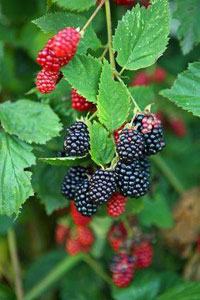
North Carolina’s diverse climate conditions, from the mountains to the coastal plains, allow backyard growers the flexibility to grow blackberries or raspberries depending on where they live. The materials in this section are intended to help those interested in adding blackberries or raspberries to their home garden.
Blackberries tend to do better in hotter conditions and can tolerate fluctuating winter temperatures – suitable for folks in the coastal plains or Piedmont regions. Raspberries, on the other hand, thrive in cooler weather and prefer sustained winter temperatures that are lower – ideal for growers in the mountains and western parts of the state.
Regardless of location or choice of berry, we encourage everyone to learn more about the benefits of these delicious and delightful fruits. This section of the Web site will be expanded as more materials become available. In the meantime, please check back often for new resources.
Blackberries for the Home Garden
A blackberry production checklist for home growers. Site preparation, establishment and maintenance, and blackberry varieties are covered in detail in this how-to document from N.C. State University.
Health Benefits
Health Benefits of Raspberries This white paper from the Washington Red Raspberry Commission summarizes the key nutritional attributes of raspberries, including the health benefits of raspberry consumption as they pertain to cancer, aging & cognitive function, cardiovascular health, obesity, diabetes and weight management.
Raspberries and Human Health: A Review
This abstract addresses the health benefits of consuming raspberries, including their role in the prevention of cancer, cardiovascular diseases, diabetes, obesity and aging. The author also weighs in on current raspberry research and a study on the effect of frozen red raspberries on human health.
Topical Black Raspberry Extract and Skin Cancer
Blackberry and raspberry extract may have cancer-preventing properties, as this research abstract discusses.